
Gleneagles and gWest: The Ghost Course Comes Home
By Tomas Faja, founder of ParadeGolf. Tomas has played every Scottish course featured in this article, except the still-unopened gWest.
A railwayman’s dream, three generations of golf design, and a hidden David McLay Kidd course that has finally found its owner. Why Gleneagles belongs on every serious golfer’s Scotland list.
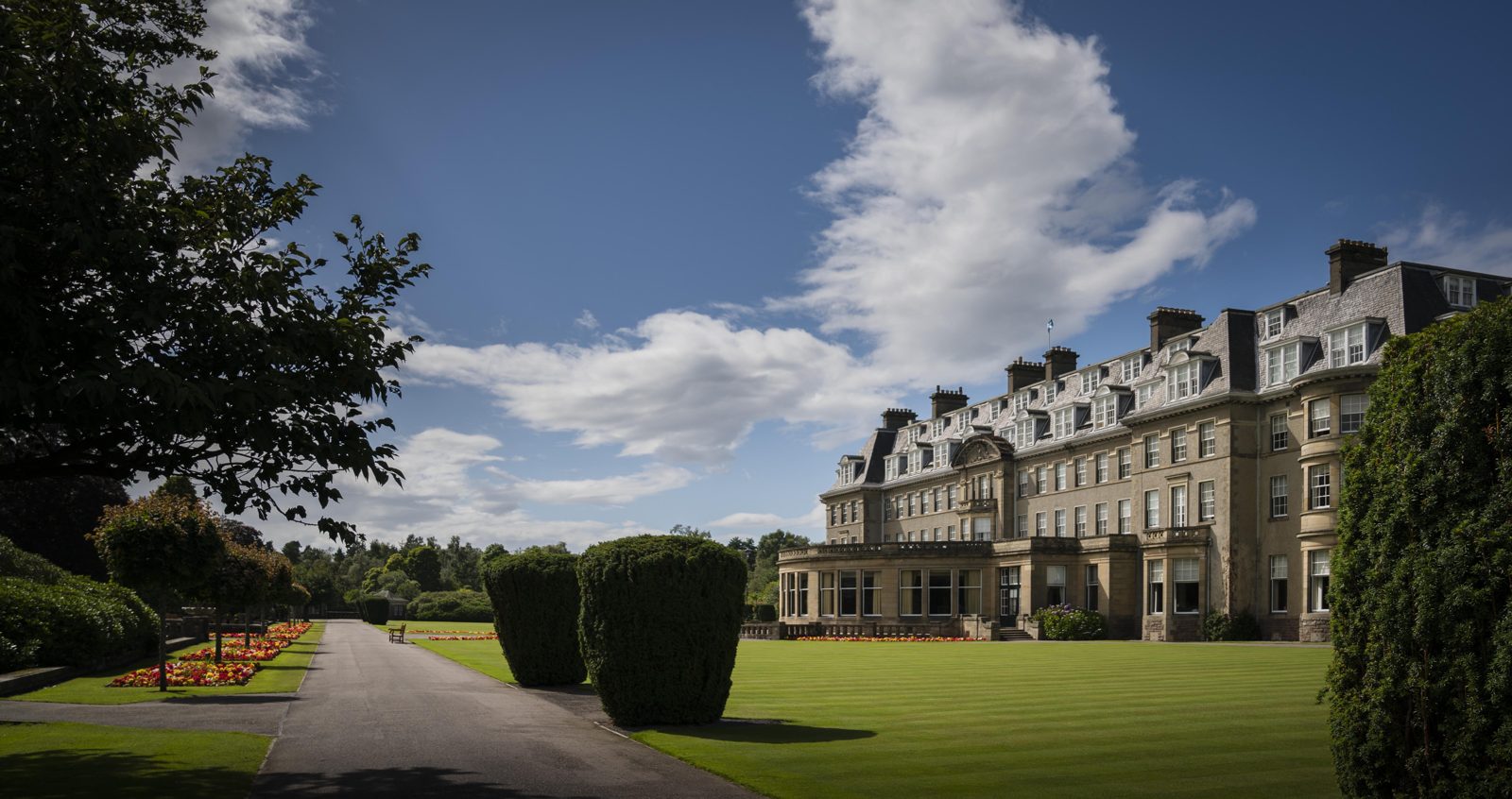
A dream born on a railway journey
Many of Scotland’s great golf places grew slowly out of common land and local clubs. Gleneagles was different. It was planned from the start as a grand Edwardian idea.
Around 1910, Donald Matheson, General Manager of the Caledonian Railway, was on holiday in Perthshire’s Strathearn valley. He looked out over moorland framed by the Ochil Hills and pictured a palace in the countryside. It would have championship golf on the doorstep and its own station on the main line, so that travellers from London could step off the sleeper and into the Highlands without giving up any comfort.
He hired the best man available. James Braid, five-time Open Champion, was asked to lay out two courses on the moor. The First World War halted work on the hotel, but the golf went ahead. The King’s and Queen’s courses opened in 1919, five years before James Miller’s château-style hotel finally welcomed its first guests in June 1924.
A century on, the idea still works: arrive, check in, and walk out onto some of the finest inland golf in Britain.
Three courses, three generations of design
What makes Gleneagles special for golfers is that its courses show how golf design has changed over the last hundred years.
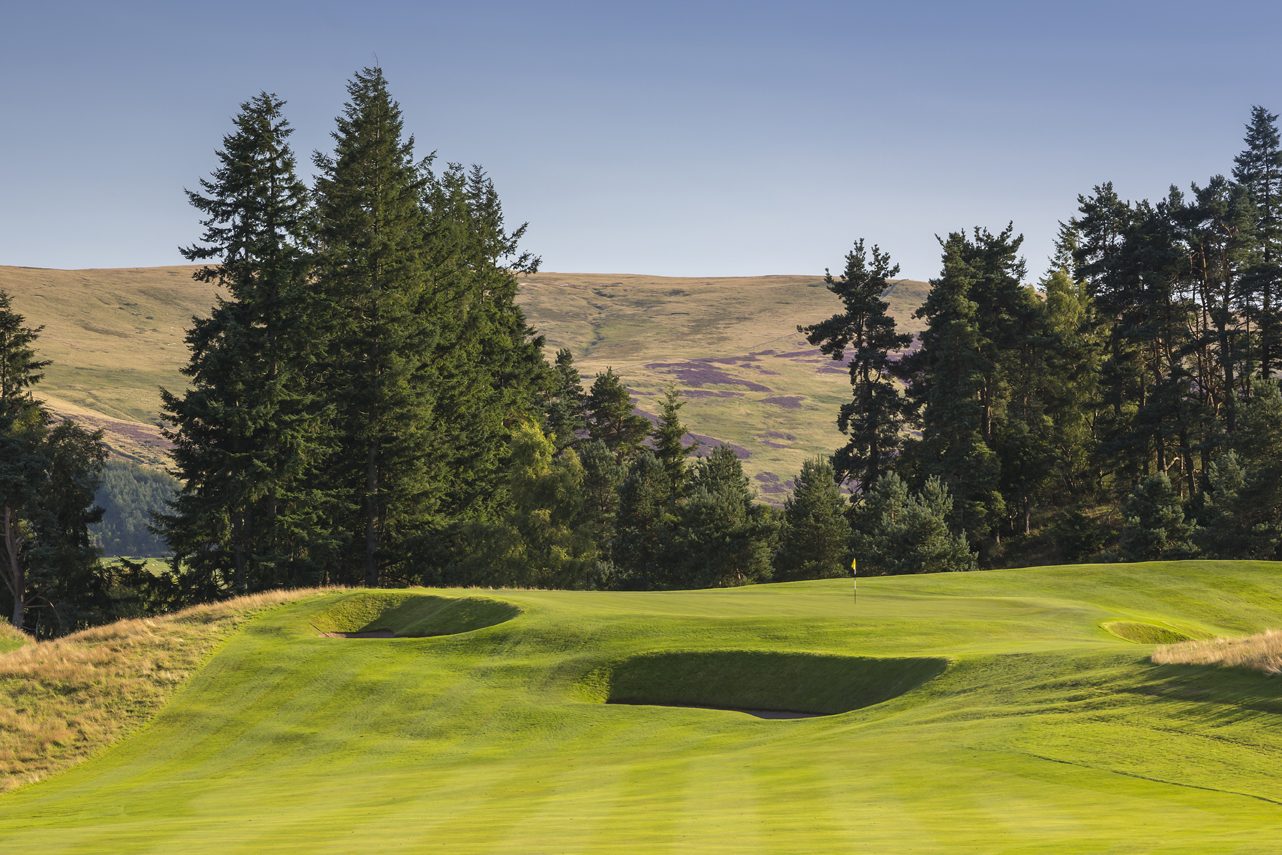
The King’s Course (James Braid, 1919). Braid didn’t fight the land. He used its ridges, hollows and blind crests, and placed bunkers to punish a poor angle rather than a lack of power. The King’s is the boldest of the three, with big moorland views, heather framing the holes and a natural rhythm that never feels manufactured. We’ve played it many times, and it is our favourite at Gleneagles. If you have time for only one round here, play the King’s.
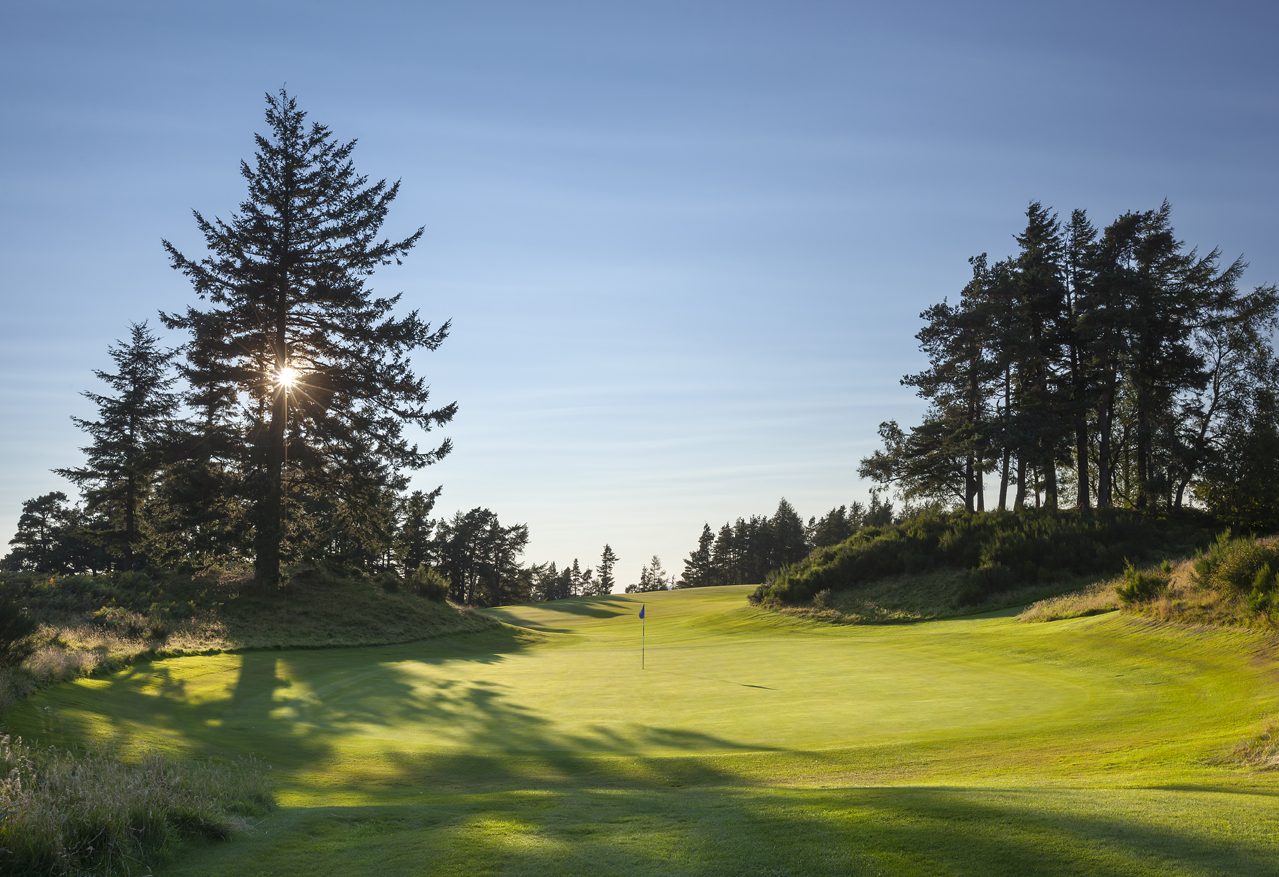
The Queen’s Course (James Braid, 1919). This is Braid’s quieter side. It is shorter and more intimate, and it winds through woodland, past lochans and over gentler ground. It suits a relaxed afternoon round or a second round on the same day, and it can still catch you out.
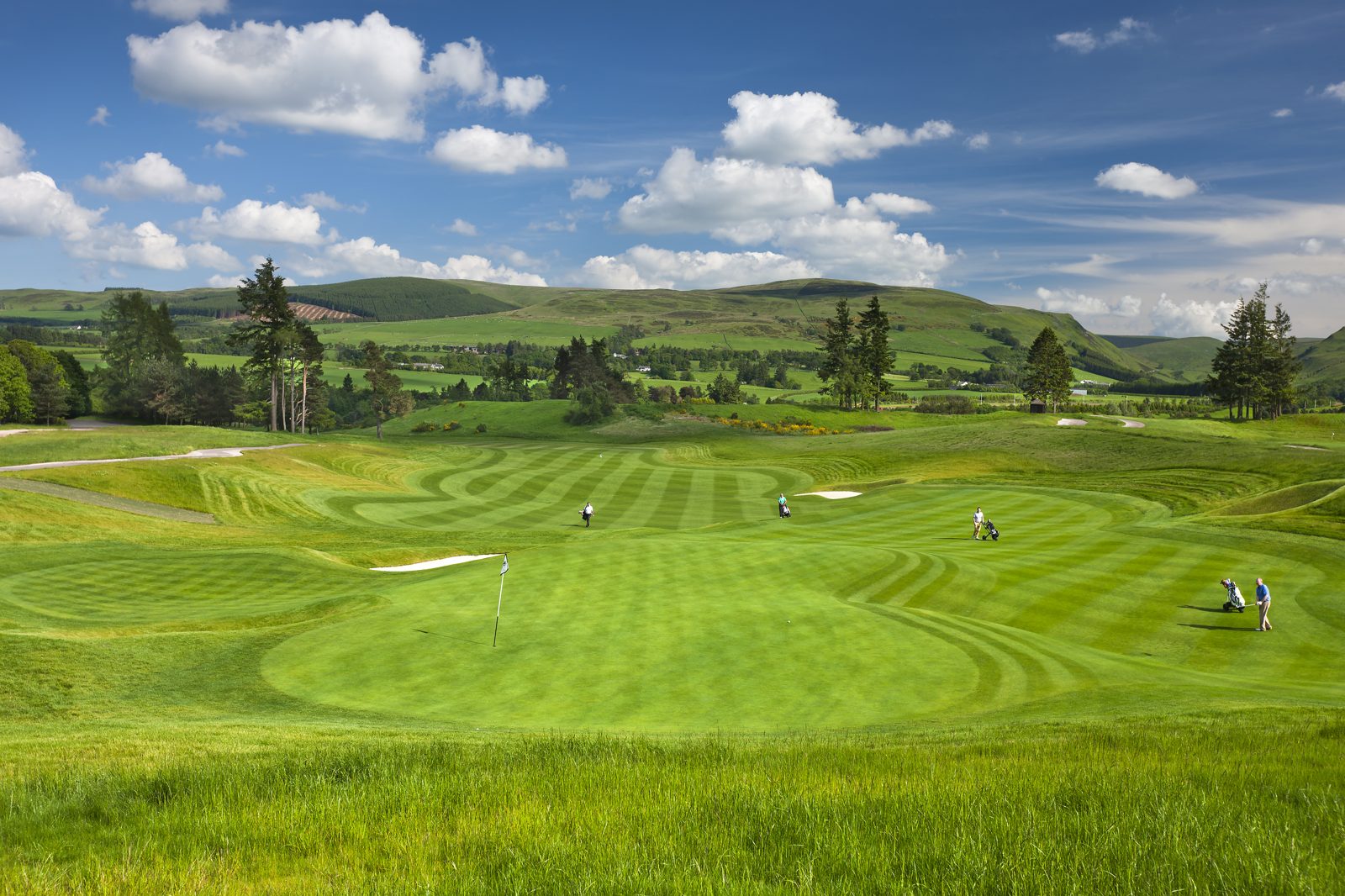
The PGA Centenary Course (Jack Nicklaus, 1993). More than seventy years later, Gleneagles chose a very different voice. Nicklaus’s course opened as the Monarch’s and was renamed in 2001. It brought modern championship scale to Perthshire: wide fairways, big elevation changes and raised greens that demand high approach shots. It hosted the 2014 Ryder Cup, and it was built for exactly that kind of week.
We’ve played all three several times. That’s why we keep sending clients here: three courses with very different characters, all a few minutes’ walk from your room.
The ghost course next door
Just beyond the boundary fence, a fourth chapter was taking shape.
In 2007, the family of billionaire Mahdi Al Tajir unveiled gWest. Al Tajir is a former UAE Ambassador to the UK and the owner of Highland Spring. gWest was planned on the neighbouring land at Blackford as an ultra-private rival to Gleneagles: a gated estate with a luxury hotel, villas, a grand clubhouse and an 18-hole championship course at its centre.
The course was completed in 2009. Then the financial crisis hit. The villas were never built, and the clubhouse stayed an unfinished shell. The golf course was kept and maintained, but it never opened to the public.
Golfers began calling it Scotland’s “ghost course”: a finished design by one of the world’s best-known modern architects, hidden away next to one of the most famous resorts in the country.
David McLay Kidd: an architect coming home
The best part of this story is the architect.
David McLay Kidd is closely tied to Gleneagles. His father, Jimmy Kidd, took over as manager of the Gleneagles courses in 1981. David spent his teenage years on the estate, playing the old Prince’s and Glendevon courses with his best friend until they ran out of balls. In the 1990s he worked as Director of Design for Gleneagles Golf Developments. That role led, through his father’s contacts, to an invitation to Oregon and to Bandon Dunes, the course that made his name.
So gWest was never just another commission. The man who grew up on the Gleneagles estate was hired to build a rival to it. The project then ended badly for him: a dispute over unpaid fees meant he barely spoke about the course for years. Now Gleneagles owns it, and the course has in a sense come home with him.
We have a personal reason to care. We’ve played two of Kidd’s Scottish courses, and both are among the most memorable rounds we’ve had.
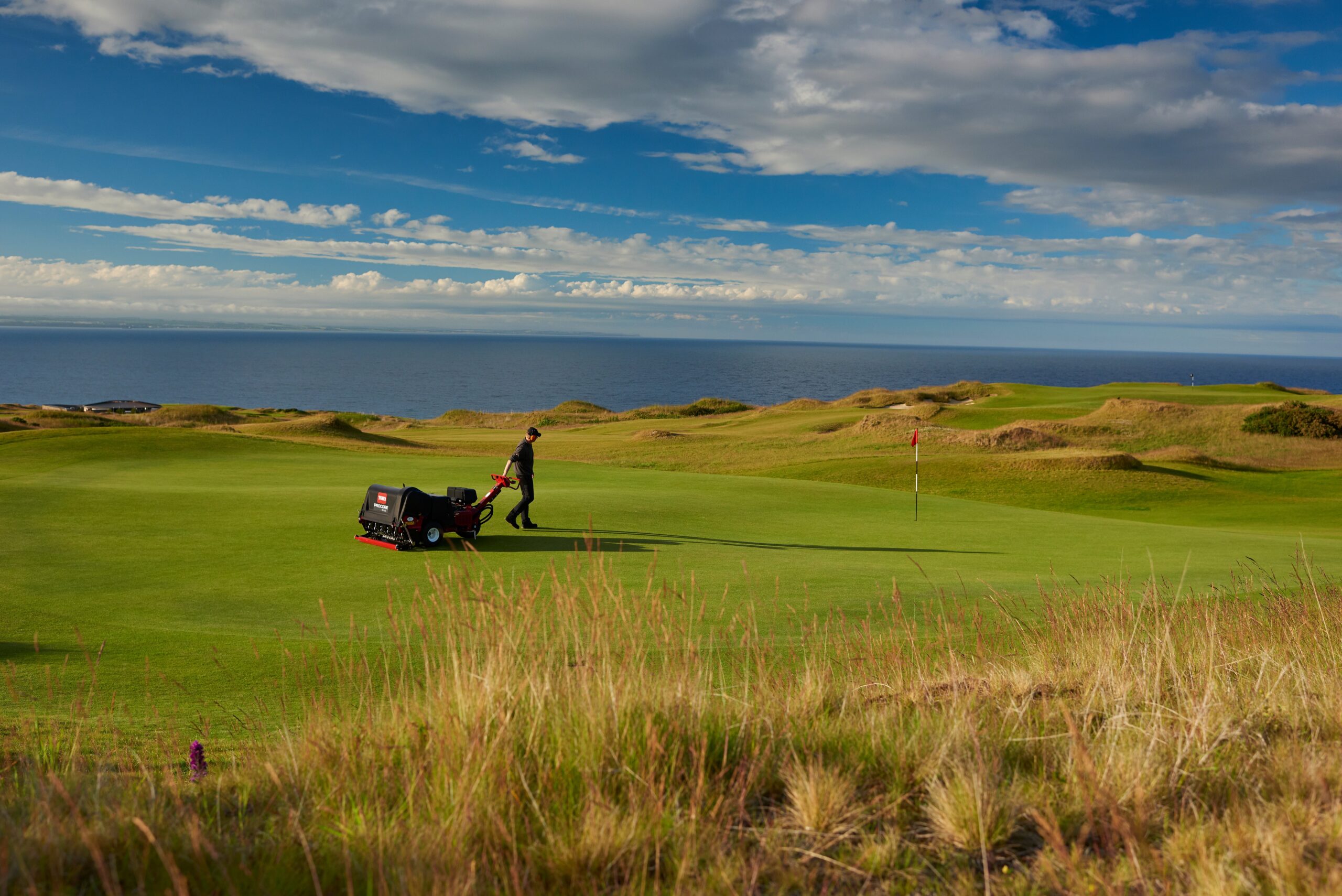
The Castle Course, St Andrews. It sits on a clifftop above the bay, with St Andrews’ spires on the horizon. It has bold contours, huge greens and angles that make you think rather than hit by numbers. It divides opinion, and some golfers find it too wild. For us it is one of the three best courses in Scotland.
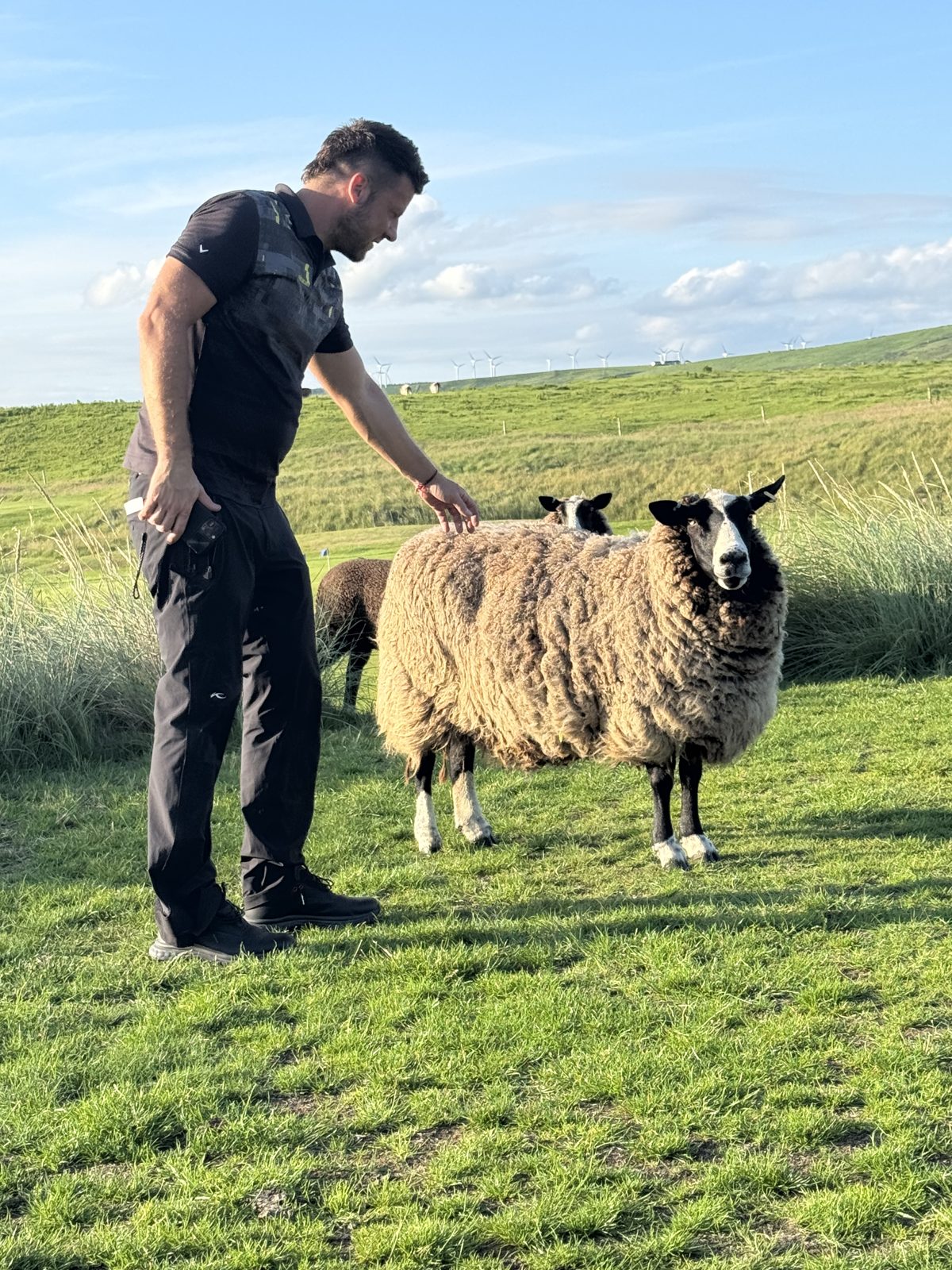
Machrihanish Dunes, Kintyre. It is remote, natural and routed through dunes that feel barely touched, and you share the fairways with the resident sheep. Here the wind and the ground decide how you play. We loved it so much that we once played it three times in a single day. It’s an amazing place, and it’s worth the journey. Read more in our complete Kintyre golf guide.
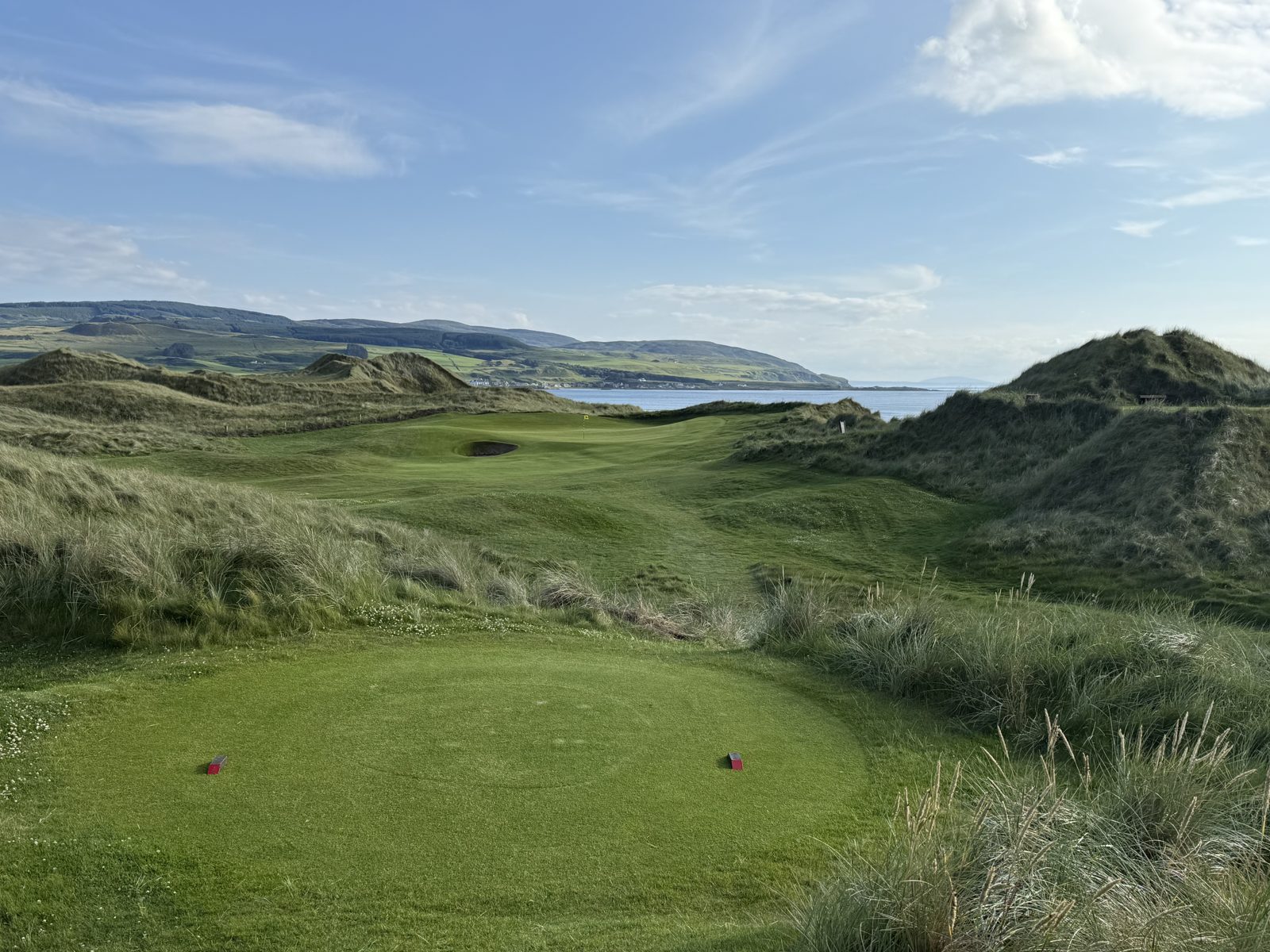
Kidd’s courses reward imagination. That’s why an unseen Kidd course in Perthshire, finished and kept in condition for almost twenty years, is so intriguing.
November 2026: a new chapter
This month Gleneagles confirmed that it has bought the 639-acre gWest estate. A course built to compete with the resort now belongs to it.
Gleneagles hasn’t yet said what happens next. gWest could open to hotel guests, become a private course, or get some refinement before anyone plays it properly. For golfers, that open question is part of the appeal.
If gWest does open, Gleneagles will offer four courses side by side that span more than a century of design:
| Course | Architect | Opened | Character |
|---|---|---|---|
| King’s | James Braid | 1919 | Classic moorland, strategic, timeless |
| Queen’s | James Braid | 1919 | Intimate, wooded, subtle |
| PGA Centenary | Jack Nicklaus | 1993 | Modern championship scale, Ryder Cup venue |
| gWest | David McLay Kidd | 2009 | Modern design built around imagination and the ground game |
Few resorts anywhere could match that.
Why Gleneagles belongs on your list
- The golf. Braid’s King’s alone justifies the trip, and the Queen’s and the Centenary make a stay of several days easy.
- The location. It is around an hour from Edinburgh, Glasgow and St Andrews, so it fits naturally into a wider Scotland itinerary. Play the Old Course and the Castle Course, then move to Gleneagles for the second half of the trip.
- The experience. Gleneagles was never only about golf. The hotel, the food, the estate and the sense of occasion make it a natural choice for groups, couples and anyone travelling with non-golfers.
- The future. With gWest now in the hands of a resort that knows how to do things properly, the next few years here should be very interesting.
We’ll be watching every step of gWest’s awakening. When it opens its gates, we intend to be among the first to play it.
Planning a golf trip to Scotland?
Gleneagles can be added to any of our Scotland golf packages, whether as a base for a few days or as the grand finale of your trip. Discover our Scotland golf trips →
About the author: Tomas Faja is the founder of ParadeGolf and has more than ten years of experience in championship links golf across Scotland and Ireland. He has played the King’s, Queen’s and PGA Centenary courses at Gleneagles many times, as well as the Castle Course and Machrihanish Dunes.
ParadeGolf | Scotland & Ireland Golf Specialists